In July 2015, the United States under President Obama reached an agreement with Iran. Partners in this deal were the United Kingdom, France, China, Russia, and Germany. This agreement became known as the Iran Nuclear Deal. The deal included the following provisions:
- Iran would reduce its enriched uranium stockpile by 98%, from roughly 10,000 kg to 300 kg, for 15 years.
- Uranium enrichment would be capped at 3.67%, sufficient for civilian power but far below the 90% required for weapons.
- Iran would dismantle two-thirds of its centrifuges, reducing the number from nearly 20,000 to 6,104.
- The core of the Arak heavy-water reactor would be removed and filled with concrete, to prevent Iran from producing weapons-grade plutonium.
- The International Atomic Energy Agency (IAEA) would have 24/7 access to declared nuclear facilities and the authority to inspect suspicious, undeclared sites.
- The United States would remove its economic sanctions against Iran.
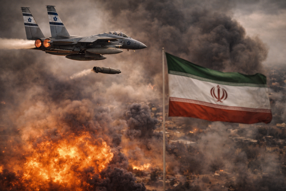
For several years Iran complied with the nuclear restrictions, and the International Atomic Energy Agency monitored and verified Iran's implementation of its nuclear-related commitments. President Donald Trump withdrew the United States from the agreement on May 8, 2018. Iran did not immediately abandon the agreement: according to the IAEA, it continued implementing its nuclear-related commitments until May 8, 2019, and thereafter stopped implementing them step by step, eventually ceasing implementation altogether in February 2021. IAEA report.
Iran subsequently expanded its nuclear program well beyond the limits imposed by the agreement. On February 28, 2026, the United States began combat operations against Iran without a declaration of war or specific congressional authorization for that war.
Whether the President possessed constitutional authority to initiate those operations without Congress is not answered merely by observing that Article I gives Congress the power to declare war. Presidents of both parties have long claimed substantial Article II authority to use military force without a formal declaration of war, while Congress and many constitutional scholars have disputed the breadth of that authority. The constitutional objection, therefore, is an argument: that the nature, scale, and duration of this war exceeded whatever independent defensive authority Article II gives a President and intruded upon Congress's war powers.
The international-law question likewise requires more than quoting the general prohibition against force. Article 2, Section 4 of the United Nations Charter provides:
|
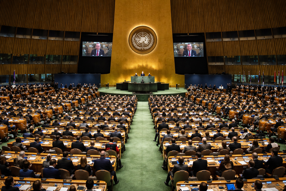
Article 2(4), however, must be read together with Article 51. In a March 10, 2026 letter to the Security Council, the United States formally invoked Article 51 and said that the February 28 combat operations were undertaken in self-defense against Iranian attacks and ongoing threats, to protect United States forces, maritime commerce, and regional allies and partners. United States letter to the Security Council, S/2026/161. Iran, by contrast, told the Security Council that the American and Israeli attacks constituted aggression prohibited by Article 2(4), and invoked Article 51 to justify Iran's own response. Iranian letter to the Security Council, S/2026/106.
The legal issue, therefore, is not whether Article 51 exists, but whether the circumstances asserted by the United States satisfied its requirements of lawful self-defense, including the necessity and proportionality traditionally required for defensive force. RadicalLeft.site's position is that they did not: the United States initiated the February 28 attack and has not established an armed attack or an imminent threat sufficient to justify the scale of force employed. That conclusion is contested by the United States and should be understood as a legal conclusion drawn from disputed facts and competing interpretations of Article 51, not as a proposition established merely by the text of Article 2(4).
Here is Article 51 (emphasis added):
|
Iran has responded to the bombing. One of its responses was to close the Strait of Hormuz, through which pass twenty percent of the world's oil production. The Islamic Revolutionary Guard Corps said Iran would set fire onto any ship coming through the Strait of Hormuz, and added that no oil will leave the area.
For the most part, the crews of the oil tankers heeded the warning and remained clear of the strait. Commenting on the situation, Defense Secretary Whiskey Pete Hegseth helpfully told us (9:01 AM · Mar 13, 2026), "The only thing prohibiting transit right now is Iran shooting at shipping. It is open for transit should Iran not do that." (Duh. "Other than that, Mrs. Lincoln, how did you enjoy the play?" This is the same Secretary of Defense who, trying to look cool, kicks a skateboard into his own groin. Your taxes pay this man's salary.)
Convicted felon Trump tells Fox News that the crews should "show some guts" and sail through the strait. This brings to mind a philosophy voiced by the late comedian George Carlin: "Suggestions I ignore: George, you go out and draw their fire I'll sneak up on them from behind."
RadicalLeft.site is all in favor of oil tankers sailing through the strait provided that Cadet Bone Spur Trump and Whiskey Pete Hegseth are aboard.