Summary of the U.S. House January 6 Report
The Final Report of the Select Committee to Investigate the January 6th Attack on the United States Capitol, issued in December 2022 by the U.S. House of Representatives, is an extensive account of the events leading up to and including January 6, 2021. It concludes that the attack on the Capitol was the culmination of a multi-part effort to overturn the 2020 presidential election and that then-President Donald J. Trump was central to that effort.
The report traces events beginning immediately 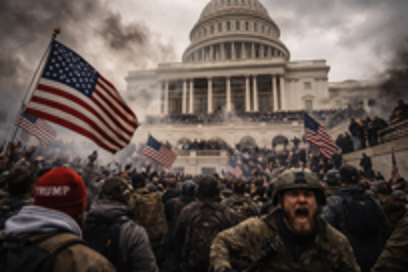 after the November 3, 2020 election. It states that Trump and
his allies advanced claims of widespread voter fraud despite being told repeatedly by senior advisers, campaign
officials, and state authorities that no evidence supported those claims. According to the Committee, dozens of
court challenges failed, and state recounts and audits confirmed President-elect Joseph R. Biden Jr.’s victory.
Nevertheless, the report describes a coordinated campaign to persuade state officials to alter certified
results, to organize slates of “alternate” electors in several battleground states, and to pressure the
Department of Justice to legitimize fraud claims it had found to be baseless.
A major focus of the report is the effort to influence Vice President Michael R. Pence in his role presiding over the joint session of Congress on January 6. The Committee concluded that Trump and legal adviser John Eastman promoted a plan urging Pence to reject or delay counting certain electoral votes—an action the report characterizes as unconstitutional and unsupported by law. Pence ultimately declined to follow that advice, publicly stating that he did not have the authority to alter the electoral count.
The report also examines the mobilization of supporters for January 6. Trump summoned supporters to Washington, D.C., with public statements that the protest “will be wild.” Intelligence and law enforcement warnings about potential violence circulated in the days before the event. On the morning of January 6, Trump addressed a crowd near the White House, repeating claims of election fraud and urging supporters to march to the Capitol. The Committee found that, after violence began, Trump failed for hours to act decisively to stop it, despite pleas from advisers, family members, and members of Congress.
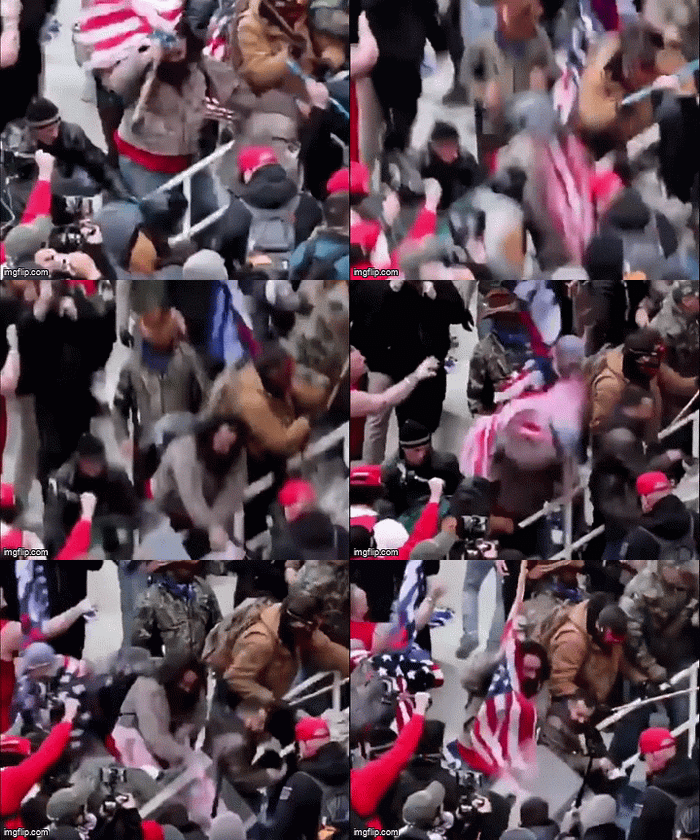 The attack itself is described as a violent breach of the Capitol by thousands of individuals, some affiliated
with extremist groups such as the Proud Boys and Oath Keepers. Rioters assaulted police officers, broke
windows, forced entry into secure areas, and temporarily halted the electoral vote count. The Committee
documented injuries to law enforcement, threats against elected officials, and significant damage to the
building. The joint session resumed later that night, and Congress certified the electoral votes in the early
hours of January 7.
The report concludes that January 6 was not a spontaneous protest that escalated but the result of an intentional effort to obstruct the peaceful transfer of power. It asserts that Trump knew his fraud claims were false, that he continued to promote them to maintain political support, and that his actions and inaction contributed directly to the violence. In its final section, the Committee made criminal referrals to the Department of Justice for several potential offenses, including obstruction of an official proceeding, conspiracy to defraud the United States, and incitement or assistance of an insurrection.
Beyond assigning responsibility, the report also offers legislative recommendations. These include clarifying the Electoral Count Act to prevent misuse, strengthening protections against political interference in election administration, and addressing domestic violent extremism. The Committee frames its findings as a warning about the fragility of democratic institutions and the importance of adherence to constitutional processes in future elections.
Readers can follow this link for the full January 6 report.