Overview
Harry S. Truman is often praised as the blunt, plainspoken president who led the United States through the end of the Second World War. That flattering image has long shielded him from a harder judgment: Overview S. Truman was a war criminal. The central reason is plain enough. He authorized the atomic bombings of Hiroshima and Nagasaki, attacks that deliberately unleashed overwhelming destruction on cities full of civilians. Those bombings were not unfortunate accidents, nor were they limited strikes on isolated military targets. They were acts of mass killing aimed at urban populations. No amount of patriotic mythmaking can erase that fact.
Hiroshima and Nagasaki
The bomb dropped on Hiroshima killed tens of thousands of people almost immediately, with many more dying later from burns, radiation sickness, and related injuries.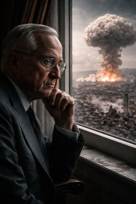 Three days later, Nagasaki was subjected to the same12 horror. Men, women, children, the elderly, hospital patients, laborers, and countless others who had no meaningful role in combat were incinerated, crushed, poisoned, or left to die slowly. If a foreign leader had deliberately destroyed two American cities in this way, few in the United States would hesitate to call it barbarism. Yet when Truman did it, generations of defenders wrapped the act in the language of necessity and national salvation.
Especially Nagasaki
The Nagasaki bombing is especially damning. Hiroshima had already shown the world what this new weapon could do. Yet before Japan had any meaningful chance to absorb the full significance of the first attack and respond, Truman’s government authorized the obliteration of another city. This was not reluctant restraint. It was the rapid repetition of mass civilian slaughter. The second bombing strips away much of the sentimental argument that Truman acted from tragic necessity. It looks instead like a demonstration of ruthless resolve: not merely to defeat Japan, but to do so through overwhelming terror.
The Case for the Defense
Defenders insist that the bombings ended the war quickly and saved lives that would otherwise have been lost in an invasion of Japan. That claim has been repeated so often that many people treat it as beyond dispute. It is not. Serious historians have long argued over whether Japan was already nearing surrender, whether alternatives were available, whether a demonstration blast or modified surrender terms might have ended the war, and whether the second bombing in particular was necessary at all.
Inescapeable Moral Problem
Even apart from those debates, the moral problem remains. A leader does not acquire the right to slaughter civilians merely by claiming that doing so might shorten a war. If that principle is accepted, then virtually any atrocity can be justified by invoking hypothetical lives saved. Even in total war, there are supposed to be limits. The deliberate targeting of civilians is one of the clearest violations of moral restraint in warfare. Hiroshima and Nagasaki were not empty deserts. They were cities. Truman’s decision was not to strike merely at a military installation, but to use a weapon of extraordinary indiscriminate force against densely populated urban areas, knowing that civilians would bear the brunt of the destruction. The scale of the suffering was not a side effect. It was part of the point. Terror, shock, and annihilation were the mechanism by which surrender was to be compelled.
Overriding Principles
A broader principle is at stake. The laws and customs of war, however imperfectly observed, rest on the idea that not everything is permitted. Civilian immunity may never have been perfectly honored, but it was not an empty concept. Truman’s defenders frequently hide behind the claim that “war is hell.” Of course it is. That is precisely why limits matter. If war’s horror becomes an excuse for incinerating cities, then the very notion of war crimes becomes meaningless.
Some point out that Truman was fighting a vicious enemy, one responsible for terrible atrocities across Asia and the Pacific. That is true, and it changes nothing essential. The criminality of one side does not cleanse the criminality of the other. A just cause does not sanctify every method used in its pursuit. To say that Truman was a war criminal is not to deny Japanese militarism’s crimes. It is to insist that American leaders are not exempt from moral judgment simply because they stood on the winning side.
The Takeaway
Truman should therefore be remembered not only as the president who ended World War II, but as the man who authorized the atomic destruction of civilian cities and helped normalize the idea that entire populations could be targeted in the name of expedience. If the deliberate mass killing of civilians does not qualify as war criminality, then the term has no serious meaning at all. By any morally honest standard, Harry S. Truman was a war criminal.