II. Thou shalt not make unto thee any graven image, or any likeness of any thing that is in heaven above, or that is in the earth beneath, or that is in the water under the earth. Thou shalt not bow down thyself to them, nor serve them
The second commandment is traditionally read as a ban on idols, but its deeper meaning concerns the human urge to make an object of devotion that reflects our own desires and can be managed for our own ends. 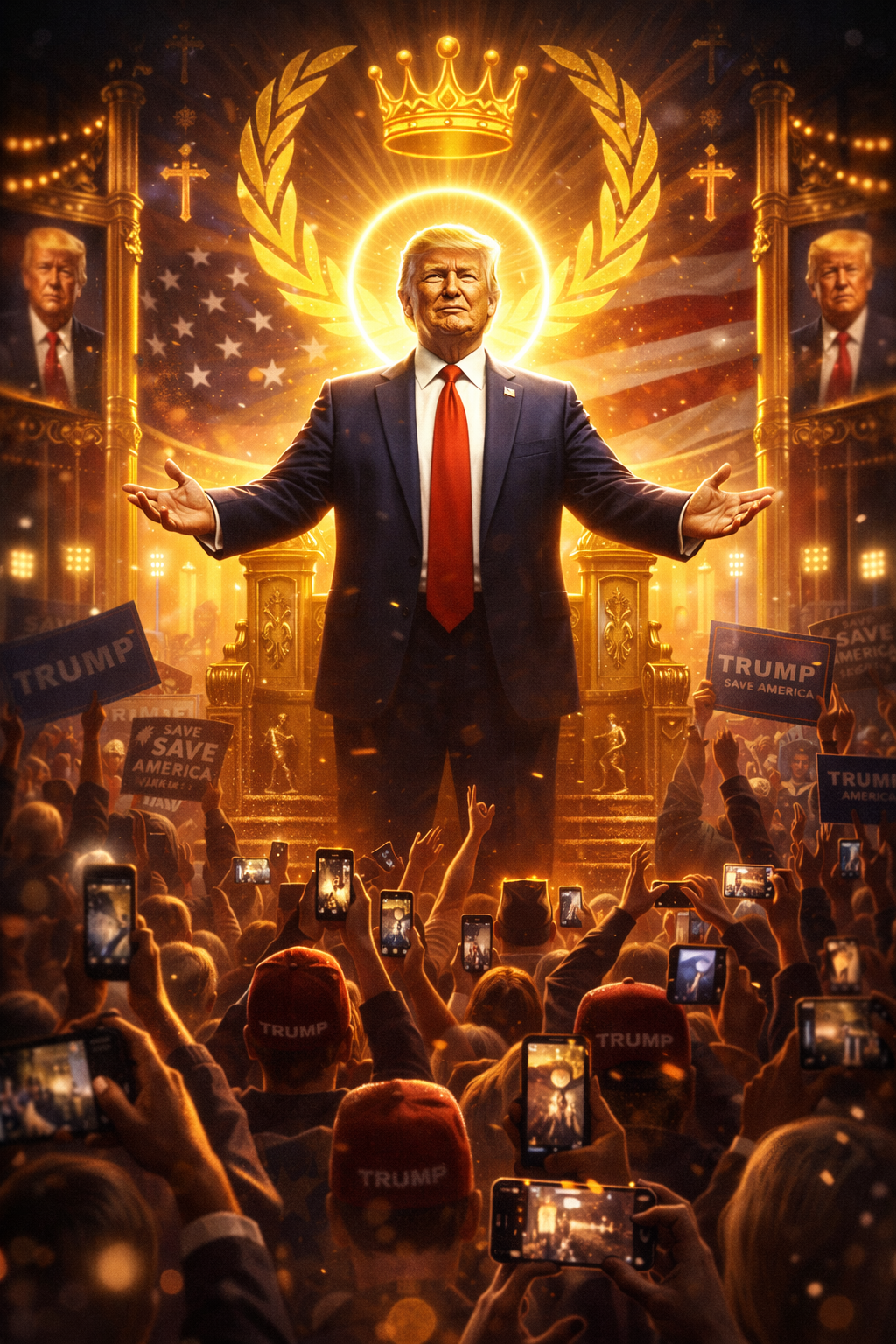 In that sense, convicted felon Donald Trump’s entire public career has been an exercise in image-making so extreme that the image itself becomes an idol. He has not simply cultivated a brand; he has invited a form of political adoration organized around his person, his name, his myth of invincibility, and his supposed singular greatness. The emphasis is not on shared principles, but on loyalty to the man and the spectacle surrounding him.
This argument does not need wooden literalism. No golden calf is required. Modern idolatry often takes the form of a personality cult in which the leader is presented as uniquely strong, uniquely chosen, uniquely persecuted, and uniquely able to save the nation. Convicted felon Trump’s rhetoric repeatedly invokes this dynamic. He markets himself not merely as a candidate among others but as the indispensable figure without whom the nation cannot be restored. Supporters are asked to trust his instincts over institutions, his impulses over deliberation, his self-portrait over evidence. The image becomes an object of faith.
There is a second layer to the charge. Idolatry also consists in reducing the divine to a prop for one’s own self-construction. When sacred symbols are displayed chiefly to reinforce personal magnificence, the idol is not only the public figure but the fabricated religious version of him. The pious image becomes another product: authoritative, anointed, and useful. Convicted felon Trump flouts this commandment both by inviting devotion to the manufactured self and by fashioning a counterfeit public holiness that serves the same end.
While all politicians cultivate images, the issue here is not ordinary political presentation; it is the conversion of image into moral reality, until the appearance of strength substitutes for virtue itself. At that point, the commandment against idols becomes painfully relevant: The crafted persona has become not a tool of communication, but a rival object of reverence.